
You are not the first man to wonder if he has anything left.
That feeling of being worn down, wrung out, and ready to walk away from something that matters is not a sign that you are uniquely broken. It is a sign that you are human. And if you spend any time in Scripture, you will find that some of the most faithful men in the Bible sat exactly where you are sitting right now.
These Bible stories about not giving up are not motivational filler. They are real accounts of men who hit their limit, felt the weight of it, and kept going because God was with them.
Key Takeaways
- You Are Not Alone: The men Scripture holds up as faithful were often the same men who wanted to quit, which means your struggle does not disqualify you.
- God Meets Men at Their Limit: From Elijah under a tree to Joseph in a prison cell, God consistently shows up when a man has nothing left to give.
- Endurance Is Built in the Dark: The stories of hope in the Bible are rarely set in easy seasons; they are forged in the hardest ones.
- Quitting Is a Temptation, Not a Verdict: Every man in these stories had a reason to stop, and God met each one of them in that exact place.
- The Source of Strength Is Always God: None of these men endured by digging deeper into their own resolve; they endured because God sustained them.

5 Men in the Bible Who Wanted to Quit
1. Elijah: When the Work Breaks You (1 Kings 19)
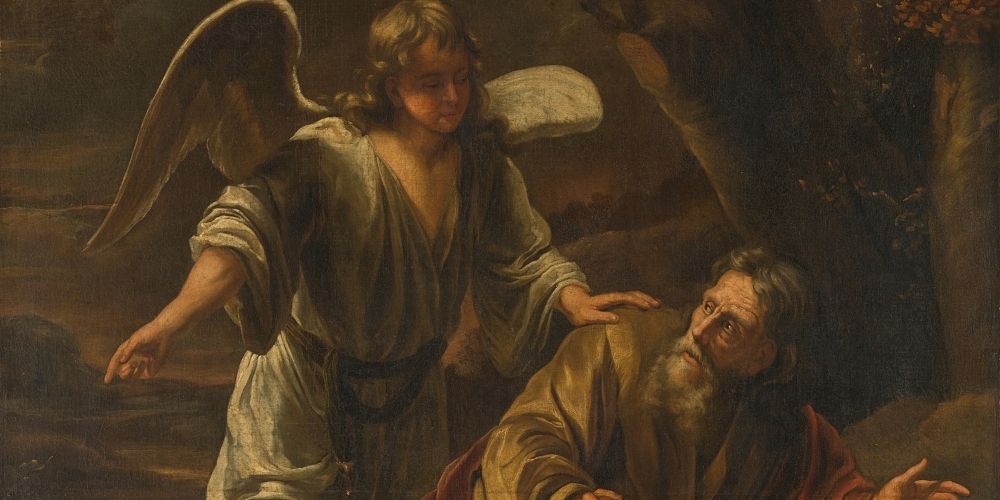
After one of the greatest prophetic victories in Israel’s history, Elijah ran. A single threat sent him into the wilderness, where he collapsed and told God he was done. “It is enough; now, O Lord, take away my life, for I am no better than my fathers” (1 Kings 19:4).
God did not rebuke him. He let him sleep, fed him twice, and then spoke to him in a still small voice. Elijah did not find the strength to go on. God gave it to him.
2. Joseph: When the Story Makes No Sense (Genesis 37–50)
Joseph was betrayed by his brothers, sold into slavery, falsely accused, and forgotten in prison. Years passed with no visible sign that God was paying attention.
Yet the text keeps repeating a quiet phrase: “The Lord was with Joseph.” Not that things were going well. Just that God had not left. What carried Joseph through each room was not his own resilience. It was God’s presence in every room with him.
3. David: When You Are Living with Your Own Mistakes (Psalm 51)
David was a man after God’s own heart who also committed adultery and arranged a murder. If you have ever felt disqualified by your own failures, his story is worth sitting with.
Psalm 51 is what it looks like when a man stops hiding. “Create in me a clean heart, O God, and renew a right spirit within me” (Psalm 51:10). What moved David forward was not self-determination. It was the mercy of God meeting him exactly where he had fallen.

4. Nehemiah: When Everyone Is Against You (Nehemiah 4–6)
Nehemiah set out to rebuild the walls of Jerusalem and was immediately met with mockery, threats, and assassination plots. He prayed, posted guards, and kept building. When enemies tried to pull him into a distraction, he replied: “I am doing a great work and I cannot come down” (Nehemiah 6:3).
Nehemiah is one of the clearest examples of godly leadership under pressure in Scripture. That steadiness did not come from his personality. It came from a man who prayed first and built second, every time.
5. Paul: When the Cost Is Higher Than You Expected (2 Corinthians 11–12)
Paul was beaten, shipwrecked, and imprisoned. He also carried a thorn in the flesh that God chose not to remove. Three times he asked. Three times the answer was the same: “My grace is sufficient for you, for my power is made perfect in weakness” (2 Corinthians 12:9).
What kept Paul going was not toughness. It was a grace that proved sufficient in every circumstance he could not escape.
The Common Thread
Every one of these men had a reason to stop. Elijah was burned out. Joseph had been betrayed and forgotten. David was carrying the weight of genuine sin. Nehemiah was surrounded by people who wanted him to fail. Paul was dealing with a “thorn.”
None of them endured by finding something extra inside themselves. They endured because God showed up in each of those hard places and provided what they could not provide on their own. That is the thread running through every story of hope in the Bible.
If you are in a season where you’re tempted to bench yourself, the answer is not to try harder. It is to do what every man on this list did: bring it to God and let Him sustain you through it.
When the weight of your season feels too heavy to carry alone, praying specifically over the people and things you are fighting for is one of the most grounding things you can do. It keeps your eyes on what actually matters and reminds you that you are not fighting this alone.

Related Questions
Which parable teaches us not to give up?
The parable of the persistent widow in Luke 18:1–8 teaches that God honors those who keep coming to Him in prayer without losing heart.
Why does God say never to give up?
Galatians 6:9 promises that those who do not grow weary in doing good will reap a harvest in due season if they do not give up.
How can I encourage someone not to give up?
Point them to a specific biblical story of someone who kept going through a hard season, and remind them that God’s faithfulness in those stories is the same faithfulness available to them now.
Did Elijah want to give up?
Yes, after his victory on Mount Carmel, Elijah fled into the wilderness and asked God to take his life, making him one of the most relatable figures in all of Scripture for anyone in a season of exhaustion.