The world defines leadership by results, titles, and influence. The Bible goes deeper, focusing on faithfulness, humility, and a willingness to serve. That gap matters, especially for men who want to lead their families and communities in a way that reflects God’s character. Leadership in the Bible is not about who has the most authority. It is about who is willing to do the most good with whatever authority they have been given.
As Christian men, we appreciate strong, godly leadership. But more than that, God calls us to develop those same qualities in our own lives. The culture around us needs to see what leadership in the Bible looks like, regardless of our titles or positions. And God has called us to paint an accurate picture.
Key Takeaways
- You Are Already Leading: Every godly man is leading someone, and leadership in the Bible starts not with a title but with a willingness to serve the people God has placed in your life.
- Biblical Leaders Were Not Perfect: Every leader in the Bible failed at some point, and what set them apart was not their track record but their willingness to get back up and keep following God.
- Faithfulness Matters More Than Results: From Isaiah preaching to people who would not listen to Daniel serving pagan kings, leaders in the Bible are defined by obedience in difficult circumstances.
- Prayer Is a Leadership Strategy: Nehemiah did not treat prayer as a warm-up; he treated it as the most important move he could make, and that posture is still the right one for any man who wants to lead well.
- Jesus Is the Standard: Every leader on this list, at their best, points toward Christ, and His model of servant leadership is the one every godly man is ultimately trying to imitate.
You Are a Leader
Before looking at specific leaders in the Bible, it is worth establishing something: you are already leading someone. At home, husbands and fathers are called to be disciplers of their families (Deuteronomy 6). In the church, the apostle Paul wrote extensively about what godly leadership should look like, defining Christian leaders by their strong moral compass, generosity, love, and faithfulness (1 Timothy 3:1–13; Titus 1:5–9).
You do not need a fancy title or a powerful position to lead. You simply need to influence people, and for godly men, that starts at home. Leading your family spiritually is one of the most important things you will ever do, and it does not require a position. It requires a posture.
Learning from Leaders in the Bible
When I was in seminary, I learned about the effectiveness of case studies in leadership development. The premise is simple: when you are trying to solve a problem, you find someone who has already solved it, study their example, and look for principles you can apply to your own situation.
Scripture is full of those case studies. God has been calling leaders for thousands of years, and He has shared many of their stories in the Bible. Even though they lived long ago, the virtues that shaped their lives still offer practical guidance for developing godly leadership today. None of them were perfect. All of them failed at some point. And yet God used every one of them. That should be encouraging.
Below are ten of those leaders. Each one reveals something specific about what leadership in the Bible actually looks like.
10 Godly Leaders in the Bible
Abraham: Walk by Faith
Abraham trusted God even when it did not make sense. When God told him to leave his homeland for a place he had never seen, Abraham obeyed. When God promised him a son in his old age and a family line that would become a great nation, Abraham believed it. God credited that faith to him as righteousness (Genesis 12:1–9; 15:1–6).
That kind of leadership does not come from confidence in yourself. It comes from confidence in God. For Christian men, having faith in God is not just a spiritual discipline. It is the starting point for everything else in your life as a leader.
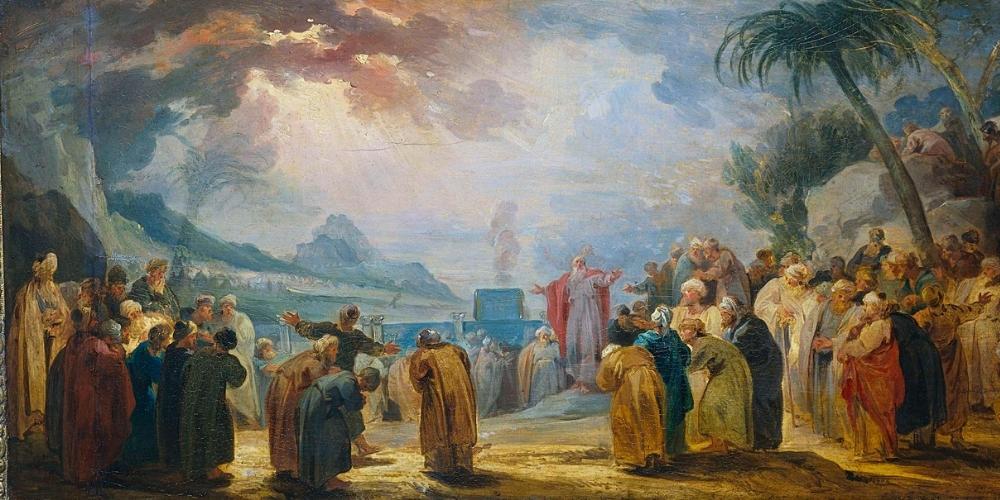
Moses: Demonstrate Humility
Nobody wants to follow an arrogant leader. Most people will work hard for a leader who is humble and genuinely cares about the people under his care. Scripture says Moses was the most humble man on the face of the earth (Numbers 12:3), which is a remarkable statement about someone who led millions of people.
Moses was humble because he understood who was actually in charge. He led a nation through the wilderness and performed miracles along the way, but he never forgot that God was the source of it all. Moses also failed in significant ways, striking the rock in anger when God told him to speak to it (Numbers 20:1–12). That failure cost him entry into the promised land. And yet his humility before God remained intact. When you allow God to be first, humility tends to follow.
Joshua: Meditate on God’s Word
Joshua had enormous sandals to fill. For four decades, Moses had led the people as prophet and advisor. Now, on the border of the promised land, Joshua represented a new generation of leadership that would oversee military campaigns and conquer enemies. Self-doubt was understandable.
Both God and the Israelites urged Joshua to be “strong and courageous” (Joshua 1:6, 18). God also challenged him to be a man of Scripture, meditating on His Word day and night (Joshua 1:8). That is still the prescription for leaders in the Bible and for any man who wants to lead God’s way: know Scripture, meditate on it, and let it shape your decisions.

David: Admit Your Mistakes
David’s rise reads like a great story. A shepherd boy becomes the greatest king Israel ever had. He trusted God through the giant, through the wilderness years, and through the battles that defined his reign. But David also made catastrophic personal choices (2 Samuel 11–12; 1 Chronicles 21), and his failures cost him and the people around him dearly.
What sets David apart is not that he fell but that he came clean. Psalm 51 is the record of a leader willing to admit he was wrong and ask God for forgiveness. Leadership in the Bible does not require perfection. It requires the humility to acknowledge failure and the willingness to get back up.
Isaiah: Do the Hard Things
Isaiah’s call story is one of the most dramatic in Scripture. He saw the Lord high and exalted, heard the seraphim cry “Holy, holy, holy,” and immediately recognized his own unworthiness (Isaiah 6:1–5). When God asked who would go, Isaiah volunteered before he even heard the job description (Isaiah 6:8).
Then came the job description: nobody would listen, and the people would keep hardening their hearts (Isaiah 6:9–13). Leadership in the Bible often looks like obedience in the face of a discouraging assignment.
Daniel: Grow Where You’re Planted
Daniel ended up far from home through no fault of his own, a Hebrew serving in the court of a Babylonian king. He could have blended in, compromised, and survived. Instead, he remained faithful to God in a foreign culture, and his godly leadership qualities led to his promotion under multiple pagan rulers (Daniel 1:19–21; 2:48–49; 6:1–5).
The principle for leaders in the Bible is consistent: grow wherever God plants you. For Daniel, that was Babylon. For you, it is wherever you are right now. The question is not whether your circumstances are ideal. The question is whether you are being faithful in them.
Nehemiah: Start with Prayer
Nehemiah wanted to help the Jewish refugees in Jerusalem, but he worked for the most powerful man in the world. Before he made a single move, he prayed (Nehemiah 1:1–11). When he finally got the chance to share his plan with the king, he prayed again on the spot (Nehemiah 2:1–5).
Throughout the book of Nehemiah, prayer is not a formality. It is a strategy. Whether rebuilding a city’s walls or dealing with opponents who wanted to derail the project, Nehemiah asked God for help at every turn. Godly leadership in the Bible is prayer-saturated leadership. Without it, you are leading in your own strength, which will not take you very far.
Peter: Take Risks
Peter walked on water (Matthew 14:22–33). He confessed Jesus as the Messiah when others were still guessing (Mark 8:27–30). He also denied knowing Jesus three times the night before the crucifixion (Luke 22:54–62), one of the most painful failures in the New Testament.
Peter’s story is proof that leaders in the Bible are not people who never fall. They are people who get back up. His failure did not disqualify him. It humbled him. And the leader he became after that failure was far more effective than the one who boasted he would never deny Jesus.
Barnabas: Live Generously
Barnabas was generous with everything he had. He sold land and gave the proceeds to the early church (Acts 4:36–37). He used his reputation to vouch for a new believer nobody else trusted, a man named Saul who had been hunting Christians for sport (Acts 9:26–30). That man became the apostle Paul. The full story of Barnabas is a masterclass in what it looks like to invest in someone others have written off.
Godly leadership involves using what you have been given for the benefit of others. Using your talents to glorify God is not reserved for the stage or the pulpit. Sometimes it looks like believing in someone when nobody else will.
Paul: Run with Passion
Paul’s background included actively persecuting the early church. After his encounter with the risen Christ on the road to Damascus (Acts 9), he pivoted completely and pursued Jesus. He was beaten, shipwrecked, imprisoned, and run out of cities. He kept going anyway.
Paul’s goal was to avoid being “disqualified” as a follower of Christ (1 Corinthians 9:24–27). Near the end of his life, he could say, “I have fought the good fight, I have finished the race, I have kept the faith” (2 Timothy 4:7). That is what leaders in the Bible aim for. Not applause. Not comfort. Finishing well. If you want a practical framework for staying in the game when it gets hard, Don’t Bench Yourself is worth reading.
The Ultimate Leader
Every leader on this list points toward Jesus. He is the ultimate example of leadership in the Bible, and He is the standard every godly man is trying to reach. Jesus did not come to be served but to serve, and to give His life as a ransom for many (Mark 10:45). He washed His disciples’ feet the night before His crucifixion and told them to do the same for one another (John 13:14–15).
That is the model. Serve first. Sacrifice willingly. Lead like Jesus.

Related Questions
What does the Bible say about leadership?
The Bible consistently defines leadership as servanthood, calling leaders to put others first, lead with humility, and use their influence for God’s purposes rather than their own (Mark 10:42–45).
How did Jesus define leadership?
Jesus defined leadership as service, telling His disciples that whoever wants to be great must become a servant.
What is God’s purpose for leadership?
God raises leaders to reflect His character, advance His kingdom, and care for the people He has placed in their lives, whether that is a family, a church, or a community.
How do you become a leader like Jesus?
Becoming a leader like Jesus starts with surrendering personal ambition, committing to serve others consistently, and staying rooted in Scripture and prayer so that your leadership flows from your relationship with God.